

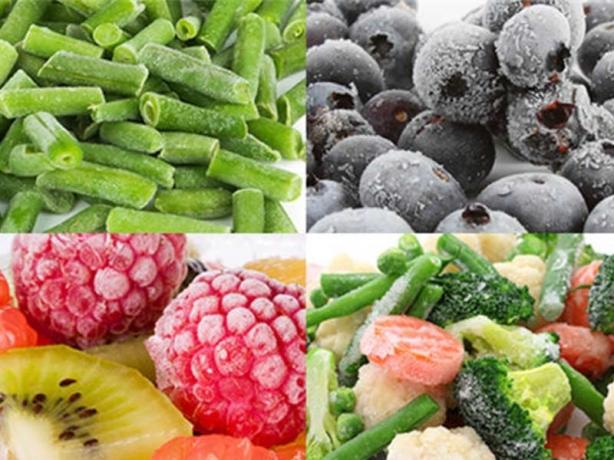
Freezing fruits and vegetables enhances their shelf life, but does frozen fruit go bad? No matter how long frozen food has been stored in the freezer, it is still safe to consume. Freezing prevents food-poisoning microorganisms from developing, making it a healthy and convenient option. According to studies, in some cases, frozen produce may have more nutrients than fresh produce, depending on what is in season and available where you live.
Yes, frozen food can develop "freezer burn" and lose taste and quality with time, but it remains one of the safest ways to preserve food in the long run. So, how long should you freeze fruits and vegetables? Read on to discover out.
How Long Do Frozen Fruits Last?
When purchasing any food item from the grocery store's freezer department, the label or container should provide a "best if used by" date. This is not the expiration date, but rather the date when a product is at its peak flavor and quality. So, can frozen fruits go bad? No. Bacteria and other pathogens cannot develop at temperatures below 0 degrees Fahrenheit, thus any frozen food is safe to consume.
However, frozen fruit might lose quality over time. For example, it may acquire "freezer burn," which causes texture and taste changes over time. Freezer burn happens when water escapes from frozen food. It is still safe to consume, although the taste may be altered. You can try to avoid freezer burn by removing as much air as possible from food packing (aka vacuum sealing) and keeping your freezer at 0 degrees Fahrenheit or lower.
Bottom line: To ensure optimal quality, lock the food tightly, keep your freezer cold enough, and utilize it by the date specified on the package. Even if the best-by date has passed and the frozen fruit has freezer burn, it is still safe to eat.
How To Freeze Fruit At Home?
You can't always consume fresh fruit quickly enough to keep it from spoiling. So, freezing it at home is a low-cost and secure option to keep it for later. Studies and research suggest the following approach for freezing fresh fruit at home. First, gather some fresh fruit, a knife, paper towels, parchment paper, a big baking sheet, and a freezer-safe container or bag.
Instructions
-
- Wash all fresh fruit well with cold running water.
- Prepare the fruit: Depending on the type, you may need to peel, core, and cut it into the correct form.
- Use paper towels to dry the fruit and remove extra moisture. This helps to prevent freezer burn.
- Place the fruit in a single layer on a large baking sheet covered with parchment paper.
- Freeze for at least four hours.
- Transfer the frozen fruit to a freezer-safe container or bag.
- To prevent freezer burn, remove as much air as possible from the container or bag before sealing it.
- Place the frozen fruit to the freezer.
How Long Do Frozen Vegetables Last?
While lettuce does not freeze well, other vegetables, such as squash, potatoes, carrots, or those found in leftovers, soups, and stews, can be stored in the freezer for up to three months. Frozen veggies, like fruit, can survive indefinitely if kept at low temperatures. While frozen vegetables (including those with freezer burn) may lose texture, taste, and quality over time, they are still safe to consume.
If you're freezing your own fresh vegetables, try blanching them first - a cooking technique that involves immersing fruit in boiling water and then immediately placing it in a basin of ice water to preserve flavor, color, and nutrients. Of course, if you buy vegetables that are already frozen, blanching is unnecessary.
For optimal quality, consume frozen food within 8 to 12 months of freezing. If you cannot utilize frozen fruits and veggies within 12 months, they are still safe to use indefinitely, although their quality may deteriorate over time.
How to Freeze Vegetables at Home?
Carrots, corn kernels, broccoli, cauliflower, green beans, peas, and Brussels sprouts are all firm vegetables that freeze nicely. Leafy greens, potatoes, and vegetables with a high moisture content, such as zucchini, can also be frozen.
You'll need your preferred vegetables, a large pot of boiling water, a huge bowl of ice water, paper towels, parchment paper, a large baking sheet, and a freezer-safe container or bag.
Instructions
-
- Wash and prepare vegetables.
- To blanch the vegetables, boil them for about one minute.
- To stop the cooking process, immediately place them in a large dish of icy water. Are you tempted to skip this step? "It's essential for preserving color and texture and retaining nutrients," according to Kirkland.
- Use paper towels to pat the vegetables dry.
- Place them on a baking sheet lined with parchment paper.
- Freeze the vegetables for about four hours, or until completely frozen.
- Transfer them to a freezer-safe container or bag, removing as much air as possible.
- Put the container or bag of frozen vegetables back in the freezer.
Key Takeaway
Frozen fruits and vegetables are just as nutritious as fresh food and might be a more convenient and cost-effective option than purchasing them fresh. Whether you buy frozen produce or freeze it yourself, follow the steps above to avoid freezer burn and keep berries, bananas, green beans, and other items fresh and tasty. While both fruits and vegetables can be kept in the freezer forever, for the best taste and texture, consume fruit within the "best by" date on the container, or within 8 to 12 months of freezing. Buy frozen fruits online with Schare Associates.